
|
 |
 |
|
||||
|
||||||
|
A few days ago I sent out an email for my Olympic
National Park workshop. This is limited to six people
at $500 each. There may have been some confusion
as I wrote $550 in the headline but $500 in the body of
the text. The price is $500.
I now have only one spot left. For more informations, take a look here. |
||||||
|
||||||
|
If you've ever entered a photo contest you've probably
seen all that very, very small writing at the end of a very
long list of rules for entry. Of course, by the time you've
gotten even close to reading that far your mind is
already thinking of which images you'll enter and what
you'll do with your grand prize winnings.
But did you know that with many contests, just by the act of entering and submitting your pictures you've given away all rights to them? What that means is that the contest organizers get to use your images for free for whatever they want. They can even relicense them and make money from images YOU created. In fact, that's often the sole purpose of the contest. Pro-Imaging.org has a page all about it here. They're assembling a list of rights-grabbing contests and a form you can use to report rights-grabbing contests that are not on the list. I'm not saying you shouldn't enter these contests, but be sure you know what you're giving up if you do. |
||||||
|
||||||
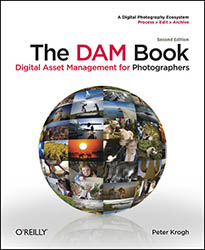
For those of you who have the first edition of The DAM
Book (DAM = Digital Asset Management), this second
edition is not simply the same book with a few
updates. It's a whole new book that addresses the big
changes in technology and software that has pretty
much overwhelmed all of us in the last couple of
years. I'm only about 100 pages into the book but I've
already picked up plenty of new knowledge.
One thing I've already changed in my workflow is to add a rights statement to the metadata template I use when images are downloaded from a CF card. Previously I had all my contact information automatically added to every image. Now I've added a statement to the Rights Usage Terms field of the IPTC Core panel that simply states "All rights reserved except those specifically granted herein. Contact Rod Barbee at 360-437-1124 or rod@rodbarbee.com to inquire about any reproduction of this image."
If you're still struggling with getting your mind and
arms and hard drives wrapped around managing your
digital images, this book is a must. You certainly don't
need to adopt all of the methods and workflow that
Peter outlines but this book will give you a lot to think
about and will definitely simplify your DAM life. |
||||||
|
||||||
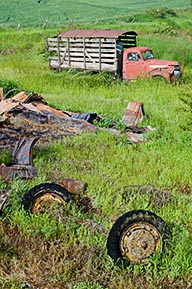
At a recent workshop in the Palouse region of eastern
Washington State we stopped by
what can only be described as "The Junk Place".
That's it. Just a bunch of junk. Old tires, an old and
shot up truck, rusted metal strewn about. Just plan
old, well, junk. But what a photographic gold mine.
After
visiting this treasure trove and then viewing each
others' images, the
unanimous consent was that we needed to go back
and spend more time.
I thought the first trip yielded some good images. The second trip found us getting more creative and, maybe more importantly, more open to seeing and finding subjects to photograph. So just because you've photographed at a location, don't believe for a minute that you've actually finished photographing it. There's always more to find. |
||||||
|
||||||
|
At every workshop somebody tells the group about
some great new utility or computer program they've
been using. Everybody jots the name and website
down and more often than not they check it out and
end up downloading and buying it.
I've
begun to compile a list of some of these fun and
useful things. You can see the list I've started here.
If you have any recommendations of your own, send them my way and I'll add them to the list so that everybody can benefit. |
||||||
 |
|
|||||